
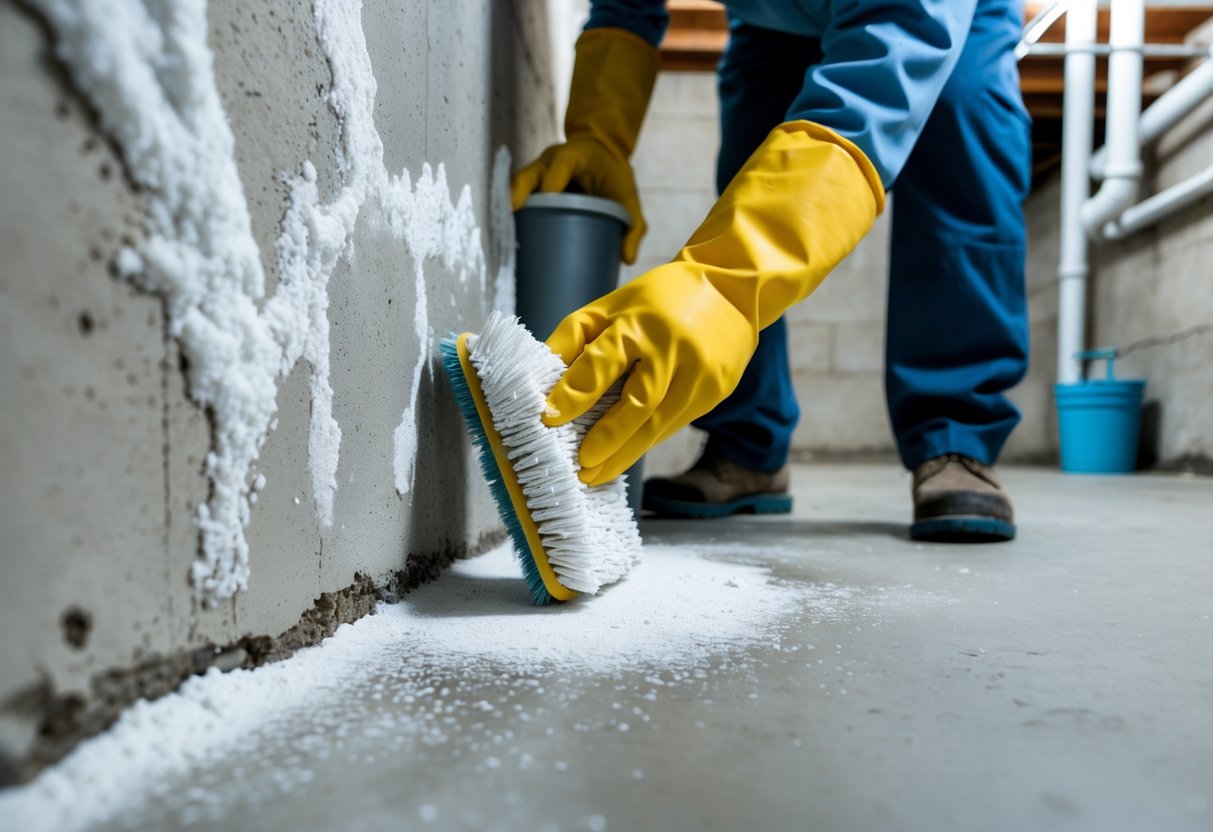
You can remove white, chalky efflorescence from basement walls by cleaning the deposits, drying the area, and stopping the moisture that brings salts to the surface. Scrub the powder away with a stiff brush and mild cleaner, let walls dry fully, and then fix leaks or add waterproofing to stop the stains from coming back.
You’ll learn quick cleaning steps, how to find where moisture is entering, and simple waterproofing fixes that prevent repeat outbreaks. This will help you restore the wall finish and keep your basement dry and usable.
Key Takeaways
- Clean deposits off walls, then let surfaces dry completely.
- Find and stop water sources to prevent future efflorescence.
- Use basic waterproofing and regular checks to keep walls clear.
Understanding Efflorescence on Basement Walls
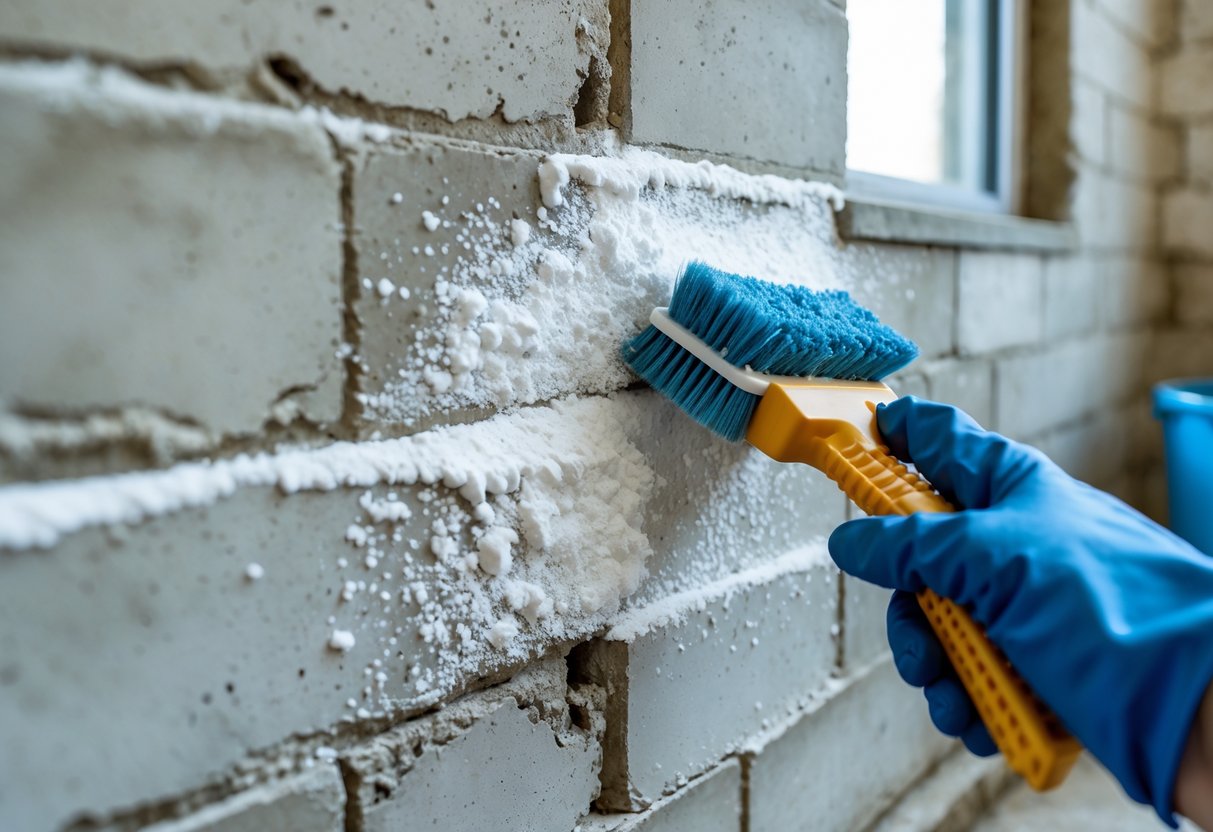
Efflorescence is a white, powdery salt deposit that shows up where moisture moves through concrete or brick. You’ll learn what causes it, how to spot it, and how to tell it apart from mould and other stains.
What Is Efflorescence and How Does It Form
Efflorescence forms when water dissolves salts inside concrete, mortar, or brick and carries them to the surface. As the water evaporates, it leaves a chalky white residue made of salts such as sodium, potassium, or calcium.
You usually see it on basement walls because basements are cooler and often have higher moisture levels. Common moisture sources include groundwater, poor exterior drainage, plumbing leaks, or high indoor humidity. Efflorescence by itself does not rot materials, but it signals moisture paths that can lead to bigger problems like spalling or foundation damage if left unchecked.
Common Signs and Identification
Look for a powdery, white or pale crust on walls, floor joints, or around block seams. The deposit often brushes off easily with a dry cloth or soft brush, leaving a slightly darker surface beneath.
Patterns matter: vertical streaks suggest water moving down from a leak or crack, while uniform bloom across a wall points to moisture passing through the wall. You may also notice dampness, salt stains that reappear after cleaning, or white residue near the floor where groundwater pressure is highest.
Difference Between Efflorescence, Mould, and Other Stains
Efflorescence is inorganic salt and feels powdery or crystalline to the touch. Mould is organic, usually darker (black, green, brown) and feels fuzzy or slimy when wet. Mould often has an odour; efflorescence usually does not.
Other stains—like mineral streaks, rust, or paint failure—have different clues. Rust will be reddish-brown and may come from metal embedded in the wall. Paint failure flakes or bubbles and won’t brush off cleanly. When in doubt, do a simple rub test: efflorescence will smear white; mould will smear coloured and smell musty.
Underlying Causes of Efflorescence

Efflorescence forms when water moves through concrete or brick, carrying dissolved salts to the surface and leaving a white residue. The main causes are excess moisture, salt sources in building materials or soil, and poor drainage or site conditions.
Moisture Problems and Water Intrusion
You will see efflorescence when water reaches masonry and evaporates on the surface. Water can enter from leaking basement walls, cracks in the foundation, or through porous block and concrete. Interior humidity and rising damp also push moisture toward the surface.
If your basement has a sump pump or dehumidifier that’s failing, the room stays damp and salts keep cycling to the wall faces. Repeated freeze-thaw cycles can widen cracks and let more water in. Addressing water intrusion and moisture infiltration is the first step to stopping new deposits.
Sources of Salt and Mineral Deposits
Salts come from materials used in construction and from the ground around your home. Concrete and mortar contain calcium and other soluble salts that dissolve when wet. Groundwater can carry chlorides and sulfates from soil and road salt.
When water evaporates, it leaves these minerals behind as the chalky white powder you see. Even new concrete can effloresce if it did not cure fully or was exposed to groundwater before it hardened. Knowing where the salts originate helps target foundation repair or material replacement.
Impact of Drainage and Soil Conditions
Poor drainage around your foundation increases groundwater pressure and forces moisture through walls. Downspouts that empty near the foundation, clogged gutters, or soil sloped toward the house all contribute to moisture infiltration. Surface water and high water table levels make efflorescence worse.
Improving your drainage system—grading soil away from the foundation, extending downspouts, and installing or repairing exterior drains or French drains—reduces the water available to dissolve and transport salts. Fixing these site issues often reduces the need for repeated cosmetic fixes and limits long-term foundation repair.
How to Remove White Chalky Efflorescence Step-by-Step
You will clean, treat and decide if you need help. Start with dry brushing and vacuuming, try a mild acid or store cleaner for stubborn deposits, and call a pro if moisture keeps returning or damage is extensive.
Surface Cleaning Methods
Begin when the wall is fully dry. Use a stiff-bristled nylon brush to loosen powdery salt and sweep or vacuum the residue into a shop vacuum. Work from top to bottom to avoid re-soiling cleaned areas.
For light deposits, dampen a sponge and wipe; avoid flooding the wall. For thicker crusts, use a non-wire scrub brush and repeat brushing until most salt is gone. Rinse sparingly with a damp cloth to remove loosened particles.
Wear gloves, eye protection and a dust mask. Protect nearby floors with plastic sheeting. Do not use wire brushes or harsh mechanical tools that can roughen concrete and expose new pores for salts to return.
DIY Efflorescence Removal Solutions
Mix equal parts white vinegar and water for a mild acid solution. Apply with a spray bottle, let sit 5–10 minutes, then scrub with a nylon brush and rinse with a damp cloth. Test a small area first to check for color change.
For tougher stains, use a commercial efflorescence cleaner or masonry cleaner labelled safe for concrete. Follow product instructions and dilute as directed. Neutralize acid cleaners with a baking soda solution (1 tablespoon per litre of water) before final rinse.
Avoid muriatic acid unless you have experience. If you use it, dilute heavily (follow label), apply briefly, rinse thoroughly, and ventilate well. Always test any cleaner on an inconspicuous spot to ensure it won’t damage finishes or painted surfaces.
When to Consult a Professional
Call a professional if efflorescence returns within weeks of cleaning. Persistent salts usually mean ongoing moisture movement through the wall that simple cleaning won’t fix.
Hire a contractor if you see surface spalling, crumbling mortar, bulging paint, or high indoor humidity that cleaning doesn’t reduce. A pro can diagnose moisture sources—poor drainage, leaking pipes, or exterior waterproofing failure—and recommend repairs.
Ask the pro for a moisture report and a repair plan that may include exterior grading, sump pump work, foundation crack repair, or interior waterproof coatings. Get written estimates and check references before hiring.
Addressing the Root Cause: Waterproofing and Prevention
You need to stop water from moving through your walls, fix leaks, and guide water away from the foundation. Do those three things and you will remove the source that brings salts to the surface.
Repairing Leaks and Sealing Basement Walls
Find active leaks first. Check cracks, mortar joints, and around window wells for damp spots or streaming water. Mark wet areas and inspect after a rain or when the snow melts to confirm active leakage.
For small cracks, use hydraulic cement or a masonry patch. Follow product instructions and apply to clean, dry surfaces. For larger or structural cracks, contact a foundation repair specialist who can assess whether you need epoxy injection, carbon fibre straps, or more extensive underpinning.
Seal interior walls with a breathable masonry sealer or silicate-based densifier to reduce salt migration while letting trapped moisture escape. Avoid fully vapour-tight coatings on very wet blocks; they can trap moisture and worsen problems.
Basement Waterproofing Solutions
Choose solutions based on where water enters. Interior systems like a perimeter drain and sump pump control water that reaches inside. Install a subfloor channel if you need to remove water without tearing out walls.
Exterior waterproofing stops water before it reaches the wall. Excavation, membrane application, and exterior drainage board paired with new backfill are long-term fixes. These are more costly but often the most reliable way to prevent efflorescence and foundation damage.
Combine methods if needed: exterior membrane plus interior drainage gives redundancy. Regularly service sump pumps, test backup power, and inspect drainage components each spring to keep the waterproofing system working.
Improving Drainage Around the Foundation
Grade the ground so it slopes away from the foundation at least 5 cm per metre for the first metre. Smooth soil, downspouts, and hard landscaping to keep surface water moving away from your walls.
Extend downspouts at least 1.5 m from the foundation or tie them into a storm sewer. Install gutter guards and clean gutters twice a year to prevent overflow that soaks the foundation.
Consider adding a French drain or perimeter tile system outside the foundation if water pools near the wall. Use a combination of gravel, perforated pipe, and geotextile fabric to keep soil from clogging the drainage system. Regularly inspect and clear these drains to maintain their function and help prevent efflorescence.
Long-Term Maintenance to Prevent Efflorescence Recurrence
Keep an eye on wall and floor surfaces, manage indoor humidity, and follow simple waterproofing habits to stop salts from returning. Regular checks and steady moisture control make the biggest difference.
Ongoing Monitoring and Inspections
Inspect walls, floors and the perimeter of your basement at least once every three months. Look for fresh white powder, damp spots, peeling paint, or blistering. Pay special attention after heavy rain or rapid snowmelt.
Use a flashlight and a magnifying glass for small cracks and joints. Record any new damp areas in a notebook or photo log so you can see trends over time. If you spot repeated wetting in one area, that likely shows a waterproofing or drainage issue that needs fixing.
Check window wells, sump pumps and exterior grading at the same time. Test the sump pump monthly by pouring water into the pit to confirm it starts and drains. Clear debris from gutters and downspouts so water runs away from the foundation.
Humidity and Moisture Control
Keep basement relative humidity between 30% and 50% to limit salt migration and condensation. Use a hygrometer to monitor levels in at least two locations; place one near exterior walls and one in the centre of the room.
Run a dehumidifier when humidity stays above 50% or after heavy moisture events. Empty or hard‑pipe the unit so it drains reliably. Seal visible cracks with hydraulic cement and caulk joints to reduce inward vapour drive.
Maintain exterior waterproofing too: ensure soil slopes away from the foundation, repair damaged exterior membranes, and extend downspouts at least 1.5 metres from the house. These steps reduce water entering masonry and lower the chance of efflorescence.
Best Practices for Basement Health
Avoid storing cardboard or fabrics directly on concrete; keep items on pallets or shelving to prevent salt‑stained goods. Use vapour‑resistant paint or masonry sealers only after leaks are fixed and concrete is fully dry.
When you clean efflorescence, remove salts with a brush and water, then allow the wall to dry before sealing. Do not cover active efflorescence with paint or impermeable coatings — that traps moisture and makes the problem worse.
Schedule professional waterproofing inspections every 3–5 years if you see recurring moisture problems. A contractor can test for rising damp, check membrane integrity and recommend targeted fixes such as interior drainage channels or improved exterior grading.
Frequently Asked Questions
These answers focus on practical steps you can take, the products you can use, and the risks to watch for. They list cleaning methods, safety notes, prevention tactics, and inspection timing so you can act now and plan maintenance.
What are the most effective methods for eliminating efflorescence on concrete surfaces?
Use a stiff brush and dry-clean loose powder first to avoid spreading salts. For stuck deposits, apply a diluted muriatic acid solution (follow label directions) or a commercial efflorescence remover, scrub, then rinse thoroughly with clean water.
For large or recurring deposits, consider mechanical cleaning with a wire brush or a pressure washer on a low setting. Always test a small area first and wear proper PPE: gloves, eye protection, and a respirator if using acids.
Can household remedies be used to clean efflorescent deposits, and are they safe?
White vinegar or a mild vinegar solution can remove light efflorescence and is safer for small spots. Baking soda and water work for gentle scrubbing, but these methods may be slow on heavy buildup.
Avoid mixing household cleaners with acids or bleach. If deposits are widespread or keep coming back, use a commercial product or hire a professional to avoid damaging the concrete or creating health hazards.
What precautionary measures should be taken to avoid the reappearance of efflorescence?
Stop water from reaching the foundation by fixing exterior drainage: extend downspouts, slope soil away from the house, and repair landscaping that traps water. Check for plumbing leaks and seal cracks where water enters.
Improve interior humidity control with a dehumidifier and proper ventilation. Apply a breathable masonry sealer after the wall is fully dry to reduce salt migration without trapping moisture inside the concrete.
How does sealing basement walls assist in preventing efflorescence buildup?
A masonry sealer limits water vapour and liquid from moving through concrete pores, which reduces the salts carried to the surface. Use a breathable, silane/siloxane-based or masonry-specific sealer designed for concrete foundations.
Do not apply non-breathable coatings over damp concrete; that traps moisture and can make efflorescence or deterioration worse. Ensure the wall is clean and fully dry before sealing.
What are the risks of ignoring efflorescence in a basement environment?
Efflorescence itself is a sign of moisture movement and can indicate higher risk of mould growth, wood rot, and corroding metal fasteners. Over time repeated wetting and salt crystallization can weaken mortar joints and concrete surfaces.
Ignoring persistent moisture also raises the chance of foundation damage that requires costly repair. Treat the cause of moisture, not just the visible salt.
How often should basement walls be inspected for signs of efflorescence?
Inspect basement walls after heavy rains and during spring thaw, plus once or twice a year as routine maintenance. Check around window wells, floor-wall joints, and any patched or repaired areas more often.
If you’ve had prior efflorescence or waterproofing work, inspect every three months during wet seasons until conditions stabilise.