
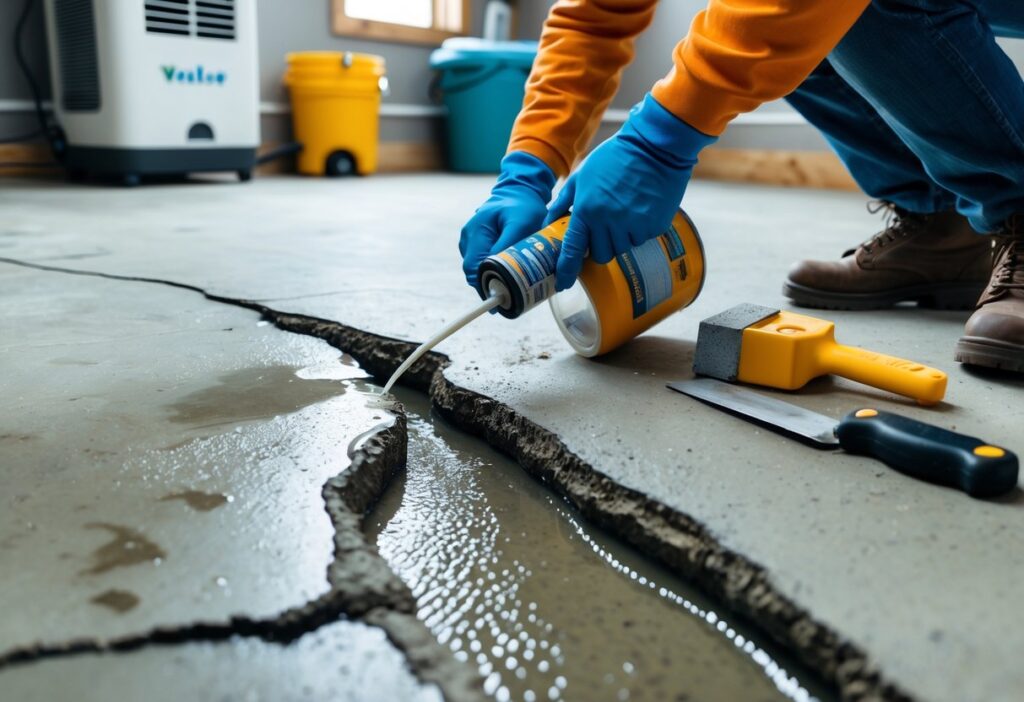
You can stop water leaking through basement floor cracks by sealing the cracks, fixing the source of the water, and improving drainage around your home. Start by finding where the water comes from, patching small cracks with a concrete or epoxy filler, and use a sump pump or interior drainage system for bigger problems.
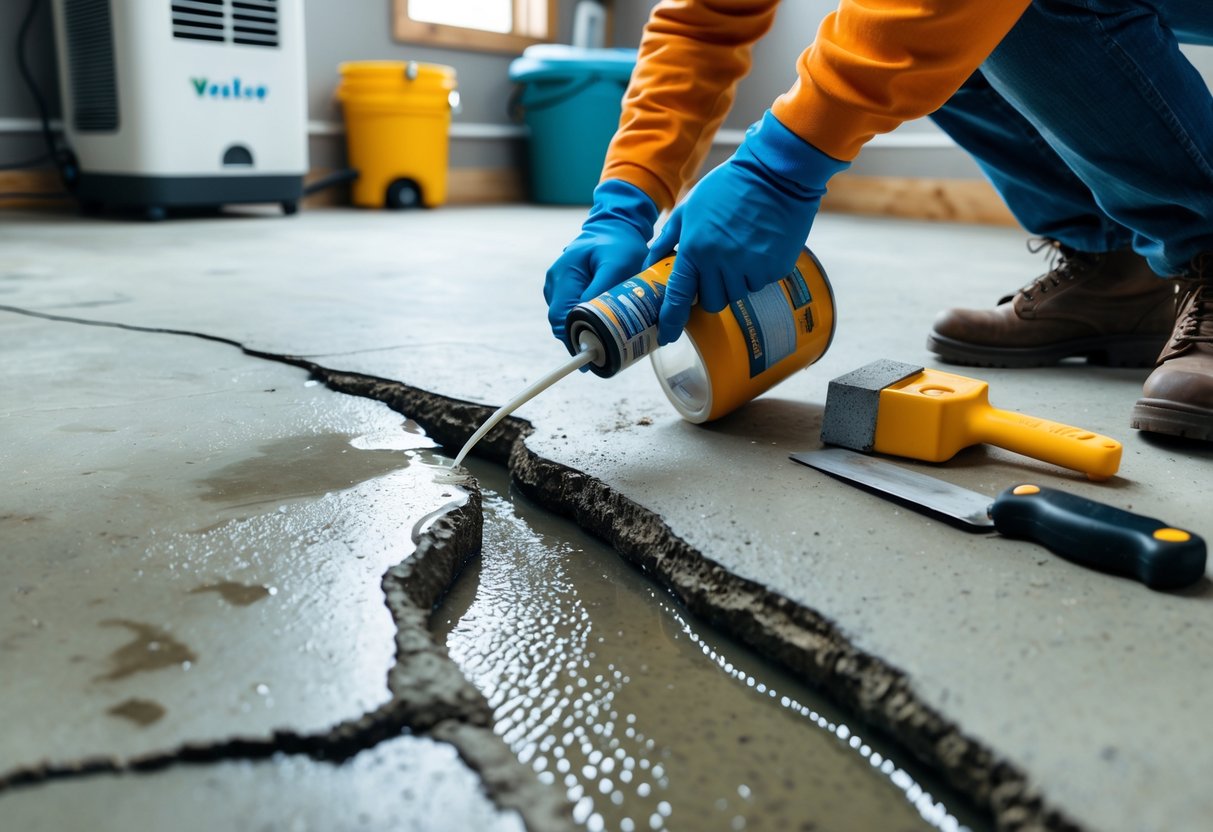
Act quickly to prevent mould, structural damage, and higher repair costs. This guide shows simple DIY steps you can try and explains when to call a pro so you can keep your basement dry and usable.
Key Takeaways
- Find the leak source, seal cracks, and dry the area to limit damage.
- Improve site drainage or install a sump/interior drain for lasting control.
- Call a professional when leaks are heavy, recurring, or affect the foundation.
Understanding Why Water Leaks Through Basement Floor Cracks
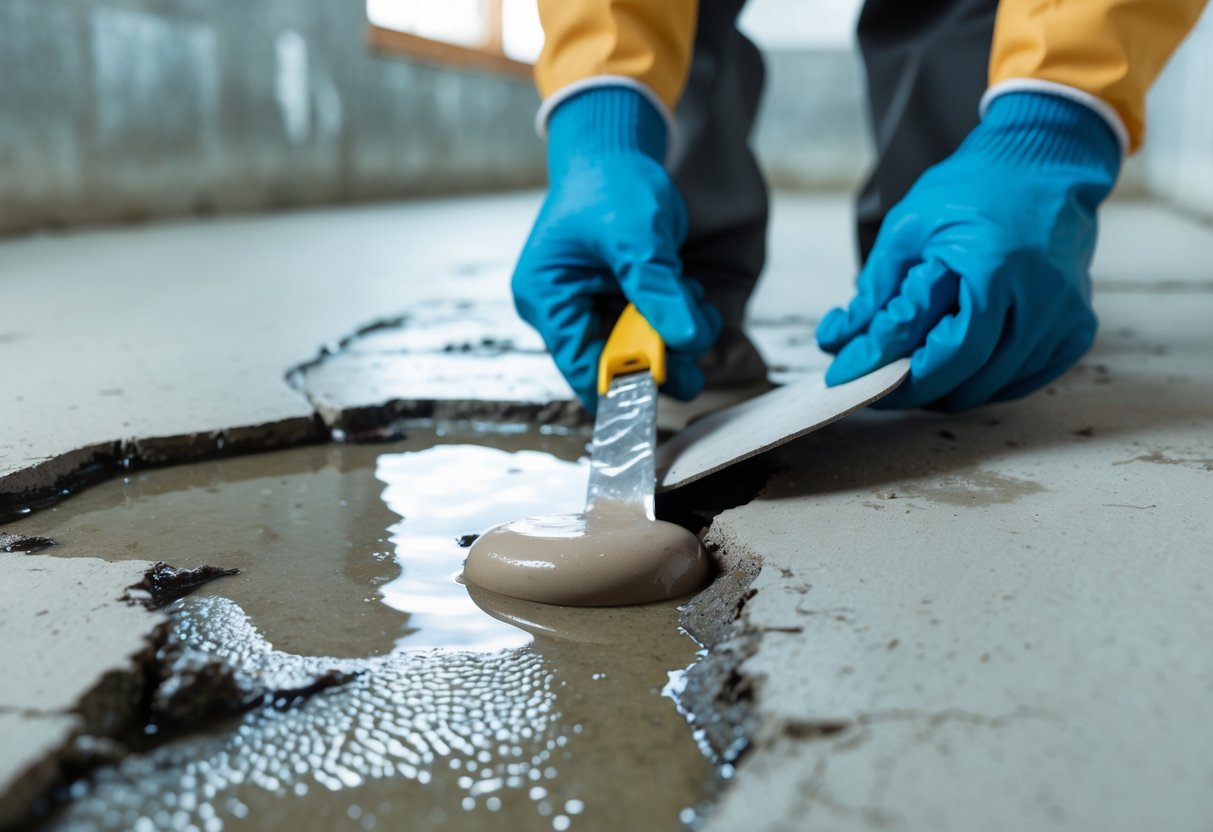
Water reaches your basement floor mainly because of pressure from outside soil, weak or moving concrete, and broken plumbing. Knowing how pressure, crack types, and the damage they cause helps you pick the right repair.
How Hydrostatic Pressure Causes Seepage
Hydrostatic pressure builds when groundwater rises in the soil next to your foundation. After heavy rain or snowmelt, water fills pores in the ground and pushes against walls and the slab. That sideways and upward force drives water through joints, hairline cracks, and even the concrete’s pores.
If your yard has poor drainage, downspouts that dump near the foundation, or a high water table, pressure increases. You’ll often see seepage at the slab joints or through small linear cracks where water follows the path of least resistance. Fixes target the water source — improve grading, install exterior drains, or add an interior drain and sump pump to relieve the pressure.
Common Types and Causes of Basement Floor Cracks
You will find several crack types: hairline, shrinkage, settlement, and structural foundation cracks. Hairline cracks are thin and often due to concrete curing. Settlement cracks are wider and occur where the soil beneath the slab compresses. Structural foundation cracks are usually vertical or stair-step and tie into wall movement.
Causes include poor compaction under the slab, freeze-thaw cycles, heavy loads, tree roots, and plumbing leaks. Locate the crack pattern: random, straight, or along joints. That pattern helps you decide whether a simple epoxy or polyurethane injection, slab jacking, or full foundation repair is needed. Document crack width and changes to guide the repair method.
Impact of Water Intrusion on Basement and Foundation
Water on your basement floor leads to dampness, mould growth, musty odours, and ruined stored items. Persistent moisture can corrode metal, rot wood, and damage drywall or flooring finishes you add to the space. You will also face higher heating or cooling costs from lost insulation performance.
Over time, repeated wetting and drying and rising hydrostatic pressure can widen foundation cracks and shift footings. That movement threatens structural integrity and raises repair costs. Address leaks early; interior patching without fixing drainage or pressure often lets the problem return and may hide progressing foundation damage.
Identifying Signs of Water Seepage in Basement Floors
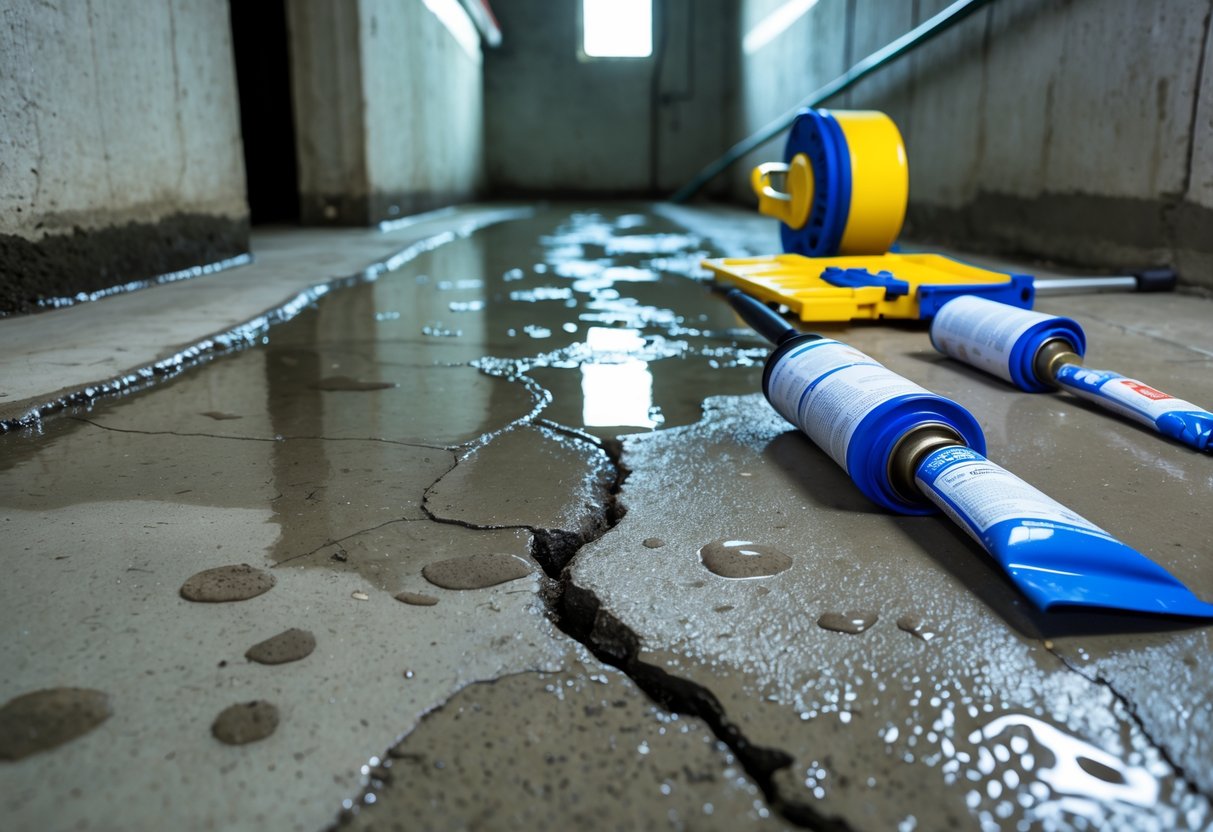
Look for visible cracks, damp spots, white powdery residue, and changes in smell or paint. Use simple tools and a quick inspection to decide if the problem is active or old.
Visual Inspection Techniques for Floor Cracks
Check the entire floor closely. Look for hairline to wider cracks that run across concrete slabs, especially near walls and along joints. Mark any cracks with tape so you can monitor growth over days or weeks.
Search for white, powdery deposits (efflorescence) on the floor or along the base of walls. That indicates mineral-laden water is passing through the concrete.
Note patterns of staining or darker concrete patches. Wet basement floor spots that appear after rain or overnight point to active seepage. Also inspect where floor meets wall; water often follows that seam.
Use a flashlight at low angle to reveal small or shallow cracks you might miss in normal light.
Early Warning Signs of Moisture and Water Leaks
Smell for musty or mildew odours. You might not see water yet, but persistent smells mean damp conditions and possible mold growth.
Watch for paint peeling, bubbling, or discolouration on walls and baseboards. These signs often appear before pools of water form.
Check for raised or warped flooring materials (vinyl, tiles) above the slab. Soft or damp carpet pads also indicate repeated moisture.
Look for rust on metal supports, and increased allergy symptoms or damp laundry that never fully dries. These are indirect but useful clues that basement leaks are present.
Using Moisture Detection Tools and Technology
Use a moisture meter to get a numerical reading of slab dampness. Take multiple readings across the room: the highest values show where water is concentrated.
Try a simple plastic sheet test: tape a 1 ft² clear plastic sheet to the floor and leave it 24–48 hours. If condensation or darkening appears under the sheet, moisture is moving through the slab.
Infrared cameras can show cool, damp areas where water collects, especially after rain. Combine IR with visual checks to target repairs.
For ongoing tracking, consider a humidity data logger in the basement to record spikes after storms. Keep readings and photos together to show patterns when you consult a contractor.
Causes of Basement Floor Water Leaks
Water usually finds the weakest path into your basement: through small cracks, joints, or places where construction or soil fails to keep it out. Most problems trace back to how water is handled outdoors, inside plumbing, or how the ground around your foundation behaves.
Poor Exterior Drainage and Grading Problems
If the ground around your foundation slopes toward your house, water pools at the footings and pushes through floor cracks. You should have at least a 5–10% slope (about 6–12 inches drop over the first metre) away from the foundation to move runoff away. Compact soil, layered landscaping, or driveways that channel water toward the house all make matters worse.
Poor drainage also overwhelms footing drains and any exterior waterproofing. When soil stays wet for long periods, hydrostatic pressure rises and forces water under the slab or through tiny gaps in the slab-edge joint. Fixes include regrading, adding gravel trenches, or installing a surface swale to divert water away.
Gutters, Downspouts, and Drainage Failures
Clogged gutters and poorly routed downspouts dump concentrated flow at the foundation. If your downspouts discharge at the base of the foundation or end mid-slab, each heavy rain can deliver a large volume right to the footings. That repeated exposure increases the chance of water seeping through floor cracks.
Extend downspouts at least 1.5–2 metres away from the house, and use splash blocks or buried extensions that slope away. Clean gutters seasonally and add leaf guards if you have many trees. Consider a rainwater management plan — rain barrels, grading, and drainage channels work together to reduce the load near your foundation.
Plumbing and Drain Line Issues
Not all water in the basement comes from outside. Broken or leaking water lines, sewage backups, and failed floor drains can wet the floor directly. Old cast-iron or clay drain lines can crack or root-infiltrate, causing slow leaks under the slab that emerge at cracks or joints.
Check for damp spots near interior plumbing, unusual sewage smells, or constant puddles after the house has been dry outside. Hire a plumber to camera-inspect drains or test water lines. If a slab leak exists, you may need spot repair, rerouting pipes above slab level, or trenching to access and fix the line.
Contribution of Soil Conditions and Settlement
Expansive clay, silty soils, and poor compaction change how your foundation moves and how water behaves around it. Clay swells when wet and shrinks when dry; that movement opens small gaps at the slab edge or creates new hairline cracks in the concrete floor. Settlement from poorly compacted fill can also crack slabs and shift joints.
Soil that holds water increases hydrostatic pressure and prolongs wet conditions near the foundation. You can test soil drainage by digging a 30 cm hole and filling it with water; slow drainage (more than 24 hours) indicates poor percolation. Solutions range from soil replacement and better compaction to installing a drain tile system or French drain to intercept groundwater before it reaches the foundation.
Effective Solutions for Stopping Water Leaks Through Floor Cracks
You can stop water from coming through floor cracks by fixing the crack directly, adding waterproof layers, and improving how water leaves around and under your foundation. Focus on the right materials and systems for lasting results.
Waterproofing Methods for Basement Floors
Apply a waterproof coating to the interior floor to reduce seepage through porous concrete. Use brush-on or roll-on basement waterproofing acrylics or cementitious coatings designed for concrete floors. For higher risk areas, install a polyethylene vapor barrier over the concrete before adding a finished floor to block moisture vapour.
For more severe cases, consider an interior membrane system that channels water toward a drain. These systems sit under a new floor slab or under a perimeter track and link to a sump pump. Exterior waterproofing — excavating and applying a membrane outside the foundation — is the most permanent but costs more.
Repairing and Sealing Cracks with Appropriate Materials
Clean the crack and widen it slightly with a chisel or grinder so repair material bonds well. For active leaks, pack hydraulic cement into the crack; it sets fast and stops flowing water. For structural cracks or dry hairline cracks, use epoxy injection to bond the concrete and restore strength.
After repair, seal with a flexible polyurethane or silicone-based sealant to handle small movement. For wide or migrating cracks, combine epoxy injection (structural) with a flexible sealant (movement) on the surface. Always follow manufacturer instructions for temperature and cure times.
Drainage System Upgrades for Lasting Protection
Improve exterior grading so water slopes away from your foundation by at least 1:50 (about 2 cm drop per metre). Keep gutters and downspouts clear and extend downspouts at least 1.5–2 metres from the house to reduce hydrostatic pressure.
Install an interior drainage system (perimeter French drain) along the footing inside the basement floor. Channel water into a sump pit with a submersible pump. Use a sump pump with battery backup if power loss is a concern. If you install exterior French drains, ensure they tie into proper storm sewers or daylight away from the foundation.
Drainage System Installations and Components
A proper interior drainage system directs water to a low point and pumps it clear of your foundation. You will see three main parts: the perforated drain tile, a gravel channel under the slab, and a sump pit with a pump to remove collected water.
How Interior Drainage and Sump Systems Work
Interior drainage systems collect water that seeps through floor cracks and along walls. You cut a narrow trench around the basement perimeter, lay gravel, and set perforated drain tile on top of the gravel. The tile runs to a low spot where you install a sump pit.
Water flows by gravity or capillary action into the drain tile and then into the sump pit. The system stops water from spreading across the slab and lowers hydrostatic pressure against the foundation. Proper slope and continuous tile routing are crucial to make sure all leaks lead to the pit.
Role of the Sump Pump and Sump Pit
The sump pit holds water in a basin until the pump activates. You choose a pit size and location that match the system’s capacity and the basement layout. Submersible pumps sit inside the pit; pedestal pumps have the motor above the pit. Both move water out through a discharge pipe.
The pump’s float switch turns it on when water rises. The discharge line must slope away from the foundation and end where water won’t flow back. Backup power or a battery backup improves reliability during storms and power outages.
Maintenance Tips for Drains and Pumps
Check the sump pit and pump every 3–6 months. Clear debris, leaves, and sediment that can clog the drain tile or stall the pump. Test the pump by pouring a bucket of water into the pit to confirm the float engages and the pump evacuates water.
Inspect the discharge line for frozen sections or clogs, and verify the check valve prevents backflow. Replace worn float switches or corroded components promptly. If you hear unusual noises or the pump cycles too often, call a contractor to avoid failure during heavy rain.
Professional Help and Long-Term Prevention
You will learn when to call experts, how to pick a reliable contractor, and what maintenance keeps your basement dry long term.
When to Consult a Foundation Specialist
Call a foundation specialist if cracks grow, widen, or show vertical or stair-step patterns. Cracks that leak after every rain, or soil heave and uneven floors, mean structural forces may be at work. A specialist inspects foundation movement, measures crack shifts, and may recommend underpinning or wall anchors if the foundation has moved.
Bring photos, measurements, and a history of when leaks happen. Ask for a written assessment that names the cause, not just surface fixes. If the report recommends foundation repair, get a second opinion before major excavation or structural work.
Selecting a Qualified Waterproofing Contractor
Choose a waterproofing contractor with local experience and proof of insurance and licences. Verify at least three recent references and view before-and-after photos of similar jobs. Ask whether they use interior drainage + sump pump systems, exterior excavation and membrane, or crack injection — each method targets different causes.
Get itemized written estimates, timelines, and a warranty that covers labour and materials for several years. Confirm the contractor will obtain permits if needed. Prefer contractors who offer a free site visit and a clear maintenance plan after work finishes.
Ongoing Maintenance for a Dry Basement
Keep gutters clean and extend downspouts at least 1.5–2 metres from the foundation to stop water pooling near the slab. Maintain a 5–15 degree slope away from your foundation with compacted soil or added topsoil to direct surface water away.
Test your sump pump every few months and replace the pump every 7–10 years or sooner if performance drops. Inspect interior drainage channels, check for new cracks annually, and reseal small hairline cracks with epoxy or polyurethane before they worsen. Keep landscaping and tree roots away from the foundation to reduce soil pressure and seepage risk.
Frequently Asked Questions
Below are direct answers about causes, repair materials, when to hire a pro, how to find the root cause, and ways to stop leaks from coming back.
What are the primary causes of water seepage in basement floors?
Water most often enters through cracks in poured concrete or joints where the slab meets walls.
Hydrostatic pressure from saturated soil forces water up under the slab and into weak spots.
Poor surface grading, blocked exterior drains, and high groundwater after heavy rain also push water toward and through the floor.
Can sealing floor cracks effectively prevent basement water leaks?
Sealing small, dry cracks can stop light seepage and reduce moisture for a time.
If water comes from hydrostatic pressure or large structural cracks, sealants alone usually won’t fix the problem.
Combine crack sealing with drainage or sump pump work when water pressure or multiple leak points exist.
What materials are best suited for repairing cracks in a basement floor?
Polyurethane or epoxy injection resins work well for narrow cracks and bond tightly to concrete.
Hydraulic cement plugs fast, active leaks but can shrink over time.
For wider or moving cracks, use flexible polyurethane or a combination of injection plus surface epoxy/mortar for a long-lasting repair.
Is it necessary to call a professional for basement floor water leakage, or can it be a DIY project?
You can handle small, dry hairline cracks and simple surface repairs yourself with epoxy or masonry products.
Call a professional if you see recurring leaks, wide or multiple cracks, mould, bowing walls, or standing water after repairs.
A pro can diagnose hydrostatic issues, install interior drainage or an exterior waterproofing system, and ensure structural problems get fixed.
How can I identify the underlying issue causing water to leak through my basement floor?
Note when leaks happen: only during heavy rain, after snowmelt, or constantly. Timing points to surface drainage or high groundwater.
Inspect crack width, location, and any wall damage or damp soil outside. Use a moisture meter and look for efflorescence, mould, or damp seams at the cove joint.
If you can’t find the source, have a professional run a dye test, camera inspection of drains, or check the sump and perimeter drainage.
What preventive measures can be taken to avoid future water leakage in the basement?
Keep soil sloped away from the foundation and maintain gutters and downspouts to discharge water at least 1.5–2 metres from the house.
Clean and repair exterior drainage, fix clogged perimeter drains, and consider installing a sump pump and interior drainage if groundwater is high.
Seal small cracks and apply exterior waterproofing membranes during major work, and monitor grading and landscaping that directs water toward your foundation.