
Mississauga homeowners face unique challenges when it comes to basement moisture due to the region’s clay-heavy soil, fluctuating water tables, and seasonal weather patterns. Whether you’re dealing with minor dampness or significant water intrusion, addressing these issues promptly protects your home’s structural integrity and prevents costly damage down the line.
Professional basement waterproofing in Mississauga involves both interior and exterior solutions designed to prevent water from entering your foundation and manage any moisture that does penetrate your basement walls or floor. These solutions range from exterior excavation and membrane installation to interior drainage systems, sump pumps, and crack repairs tailored to your home’s specific needs.
Understanding which waterproofing approach suits your situation depends on factors like the severity of water problems, your foundation type, and your budget. Companies offering basement waterproofing services typically provide assessments to determine whether you need comprehensive exterior work or if interior solutions will suffice.
Key Takeaways
- Mississauga’s soil conditions and climate make basement waterproofing essential for protecting your home’s foundation and preventing water damage
- Both interior and exterior waterproofing solutions are available depending on the severity of moisture issues and your specific needs
- Professional waterproofing companies offer warranties and customised solutions that address crack repairs, drainage systems, and long-term moisture prevention
Understanding Basement Waterproofing in Mississauga
Basement waterproofing protects your home from water infiltration that leads to structural damage, mould growth, and decreased property value. Mississauga’s climate and soil conditions create specific challenges that require tailored waterproofing approaches.
Why Basement Waterproofing Is Essential
A wet basement threatens your home’s structural integrity and your family’s health. Water seeping through foundation walls weakens concrete over time, causing cracks that expand with each freeze-thaw cycle. This damage becomes increasingly expensive to repair if left unaddressed.
Moisture in your basement creates ideal conditions for mould and mildew growth. These organisms release spores that circulate through your home’s ventilation system, triggering respiratory problems and allergic reactions. A damp basement also attracts pests like silverfish and centipedes that thrive in humid environments.
Professional basement waterproofing in Mississauga protects your investment and maintains your property’s resale value. Potential buyers often walk away from homes with visible water damage or musty odours. Proper waterproofing prevents these issues whilst creating usable living space in your lower level.
Common Causes of Basement Water Issues
Poor grading around your foundation directs rainwater towards your home instead of away from it. When soil slopes towards your house, water pools against foundation walls and finds entry points through cracks or porous concrete.
Clogged or damaged gutters overflow during heavy rainfall, dumping water directly beside your foundation. This concentrated water volume overwhelms the soil’s drainage capacity and forces moisture through basement walls.
Foundation cracks develop naturally as your home settles, but they provide direct pathways for groundwater infiltration. Even hairline cracks can allow significant water entry during storms or spring thaw.
High water tables in certain Mississauga neighbourhoods put constant hydrostatic pressure on foundation walls. This pressure forces water through any weakness in your waterproofing system, causing persistent dampness or active leaks.
Mississauga’s Unique Waterproofing Challenges
Soil and climate conditions in Mississauga create specific waterproofing requirements that differ from other regions. Clay-heavy soil retains water longer than sandy soil, maintaining pressure against foundation walls well after rainfall ends.
Older Mississauga subdivisions often lack modern drainage infrastructure, increasing the risk of basement leaks during heavy storms. Newer developments may have better grading, but construction quality varies significantly between builders.
The region experiences freeze-thaw cycles that expand existing foundation cracks throughout winter months. Spring snowmelt then delivers large volumes of water that tests every weakness in your waterproofing system. Understanding common causes of basement leaks and repairs specific to this area helps you address problems before they escalate.
Identifying Signs of Basement Water Problems
Basement water problems often reveal themselves through physical signs like moisture accumulation, structural damage, and environmental changes. Recognizing these warning signs early helps you address issues before they lead to expensive repairs or health concerns.
Visible Water and Standing Water
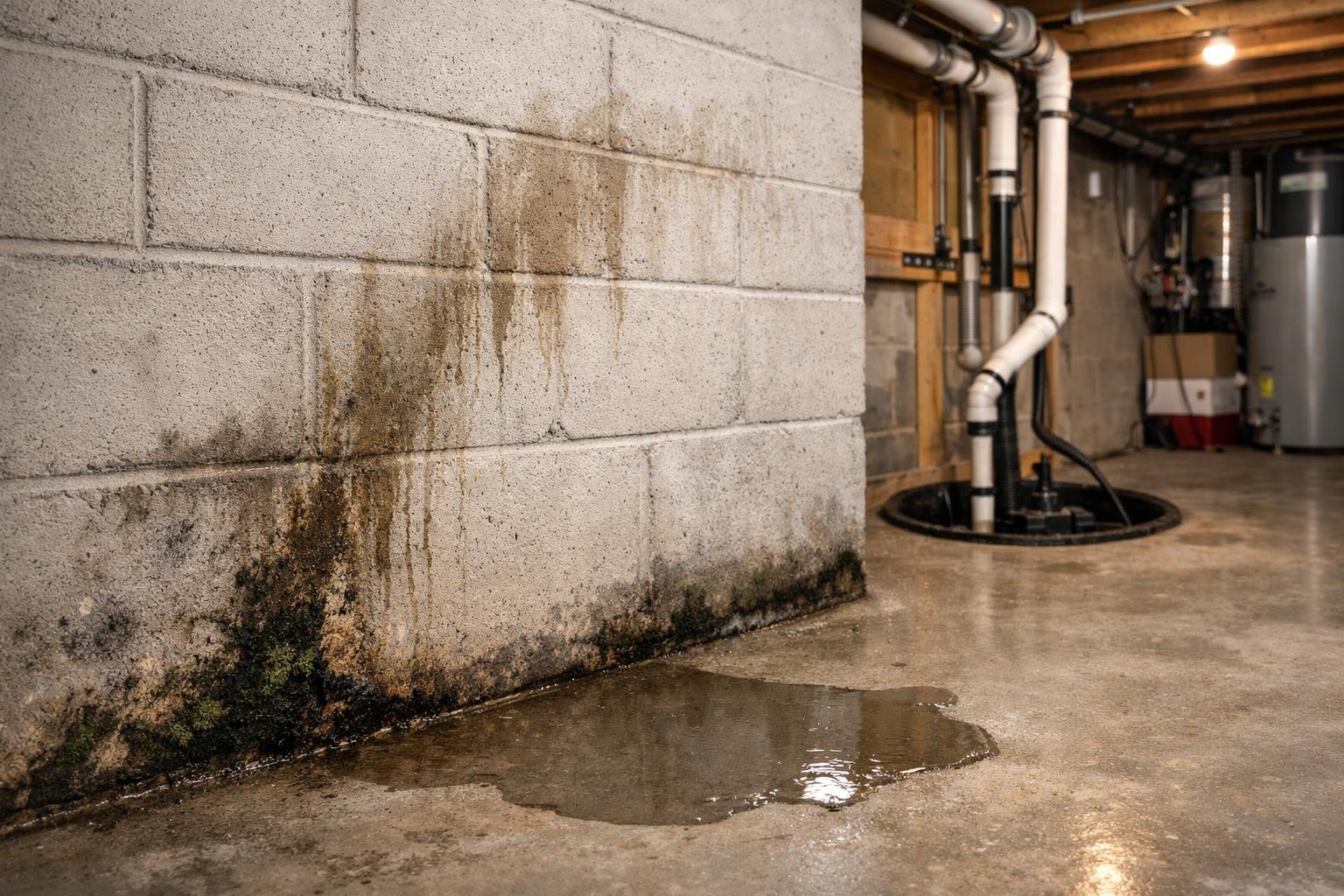
Standing water in your basement is the most obvious indicator of a water problem. You might notice puddles forming after heavy rainfall or pooling in corners and low-lying areas.
Water can enter through various entry points including floor drains, window wells, and the joint between your floor and foundation wall. Sometimes you’ll see water trickling down walls or notice wet spots that appear and disappear based on weather conditions.
Distinguishing between plumbing leaks and foundation issues is important because they require different solutions. If water appears near pipes or drains consistently regardless of weather, you likely have a plumbing problem. Foundation-related water intrusion typically corresponds with rain events or spring thaw.
Check for dampness on your basement floor by taping plastic sheeting to the concrete and leaving it for 24 hours. Moisture underneath indicates water wicking through the concrete, while moisture on top suggests high humidity.
Foundation Cracks and Water Stains
Foundation cracks allow water to seep into your basement and can indicate structural movement. Horizontal cracks are particularly concerning as they suggest pressure from soil or water outside your foundation walls.
Vertical cracks wider than 3 millimetres warrant attention, especially if they show signs of moisture or mineral deposits. Stair-step cracks in block foundations often signal settlement issues that create pathways for water entry.
Water stains appear as discoloured patches on walls and floors, typically brown, yellow, or grey. These marks show where water has previously entered, even if the area currently feels dry. Fresh stains look darker and damp, while old stains may appear faded but indicate recurring problems.
White powdery deposits called efflorescence form when water evaporates and leaves behind mineral salts. This substance appears on concrete and masonry surfaces and proves that moisture is moving through your foundation materials.
Musty Smells, High Humidity, and Mould
A musty smell in your basement indicates excess moisture even when you can’t see visible water. This odour comes from mould spores and mildew growing in damp conditions.
High humidity creates an uncomfortable environment and promotes mould growth. Relative humidity above 60% encourages biological growth and can damage stored items. You might notice condensation on cold water pipes, metal surfaces, or windows.
Mould growth appears as black, green, or white patches on walls, floors, ceilings, and stored items. It thrives in dark, damp environments and can create health problems including respiratory issues and allergic reactions.
Common mould locations include:
- Behind stored boxes and furniture
- On wooden framing and joists
- Around window frames and sills
- In corners where air circulation is poor
- On drywall and insulation materials
Peeling Paint and Structural Concerns
Peeling paint on basement walls signals moisture problems beneath the surface. Water pressure from outside pushes through concrete and causes paint to bubble, crack, and flake away from the wall.
Look for paint that feels soft or spongy when you press on it. Latex paint often shows moisture damage more readily than oil-based products. If you scrape away loose paint, you might find white efflorescence or damp concrete underneath.
Structural concerns develop when basement moisture persists over time. Wooden beams and floor joists can rot when exposed to constant dampness, compromising their load-bearing capacity. Metal support posts may rust and weaken.
Warped baseboards and trim indicate water exposure at floor level. Sagging floors above the basement suggest that moisture has damaged structural supports. Doors that stick or won’t close properly can result from foundation movement caused by water damage and soil pressure.
Damaged floor tiles or lifting vinyl flooring reveal moisture problems below. Carpet that feels damp or shows dark patches needs immediate attention to prevent mould growth in padding and subflooring.
Types of Basement Waterproofing Solutions
Basement waterproofing in Mississauga typically involves exterior methods that address water before it reaches your foundation, interior solutions that manage water once it enters, or specialized foundation treatments that reinforce structural barriers against moisture intrusion.
Exterior Basement Waterproofing
Exterior waterproofing targets water problems at their source by creating a barrier on the outside of your foundation walls. This approach involves excavating the soil around your home’s perimeter to expose the foundation, then applying waterproof membranes or coatings directly to the exterior surface.
The process typically includes installing a drainage system such as weeping tiles or French drains at the foundation’s base. These systems collect groundwater and redirect it away from your home before hydrostatic pressure can force moisture through foundation walls.
Exterior foundation membranes provide long-lasting protection because they prevent water contact with your foundation entirely. While this method requires significant excavation and labour, it addresses the root cause of basement moisture rather than managing symptoms. Your soil type and property’s water table level will influence the specific waterproofing materials and techniques your contractor recommends for optimal protection.
Interior Basement Waterproofing
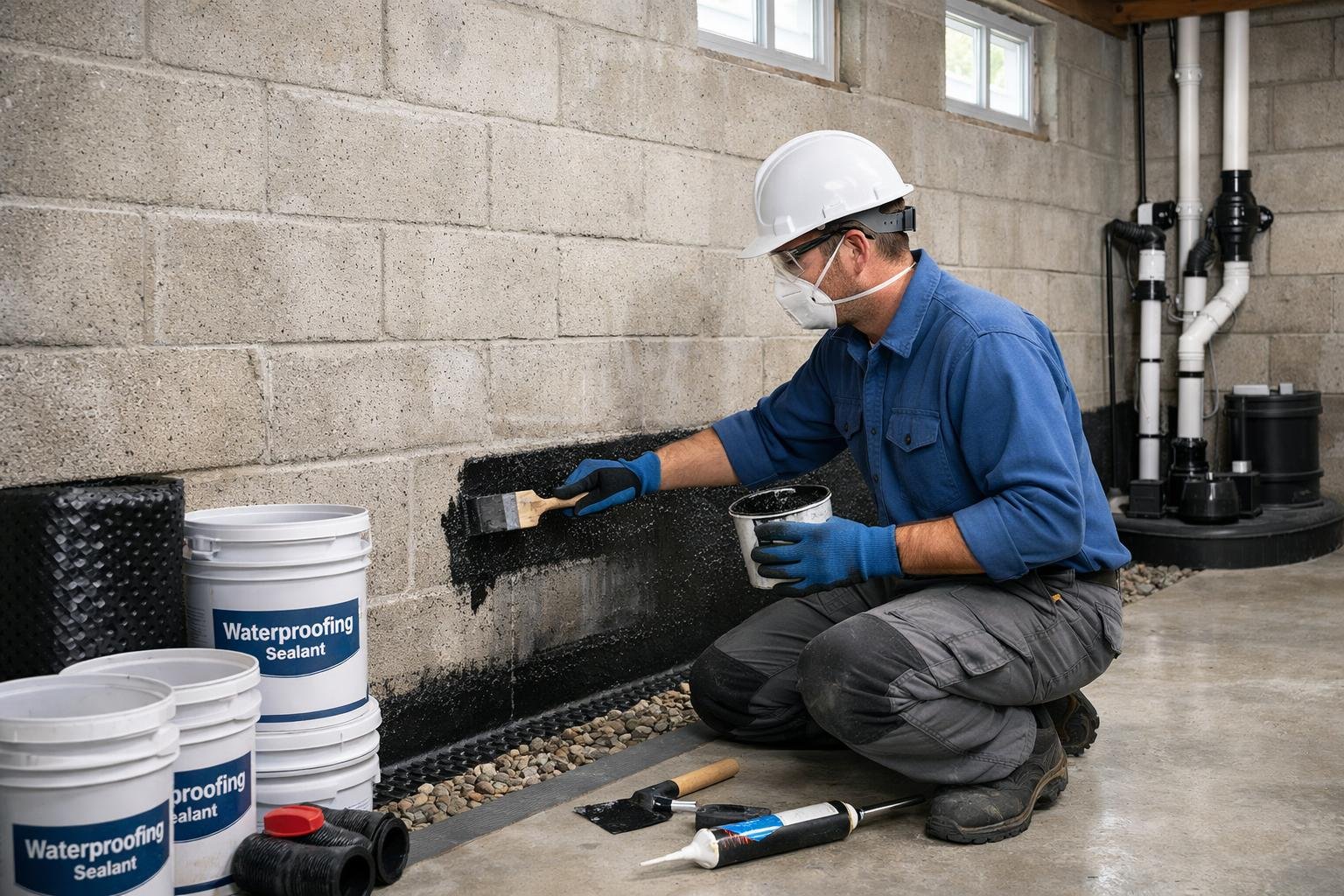
Interior waterproofing manages water that has already penetrated through your foundation or enters through cracks and joints. This approach includes installing drainage channels along the basement floor perimeter, sump pump systems, and applying sealants to walls and floors.
A common interior solution involves creating a drainage system beneath your basement floor slab. Water entering through the foundation flows into perimeter drains, which direct it to a sump pump that removes it from your home. Vapor barriers and waterproof coatings applied to interior walls help control moisture and prevent seepage.
Interior solutions cost less than exterior methods because they don’t require extensive excavation. However, they manage water after it reaches your foundation rather than preventing initial contact. Interior basement waterproofing works effectively for homes where exterior access is limited or when addressing specific problem areas like floor cracks or wall seepage.
Foundation Waterproofing Methods
Foundation waterproofing encompasses both preventative treatments and repair techniques that address structural vulnerabilities. These methods include crack injection, which fills gaps in concrete with polyurethane or epoxy materials to create watertight seals.
Common foundation treatments include:
- Crystalline waterproofing that penetrates concrete and forms crystals blocking water pathways
- Bentonite clay applications that expand when wet to seal foundation surfaces
- Membrane systems applied during construction or renovation
- Foundation crack repair using injection techniques
Your foundation’s condition, the severity of existing damage, and whether water enters through the slab, wall cracks, or along the base determine which waterproofing materials prove most effective. Foundation waterproofing often combines with either exterior or interior approaches to provide comprehensive moisture protection throughout your basement structure.
Basement Leak and Crack Repair Services
Basement leaks and foundation cracks require prompt attention to prevent water damage and structural deterioration. Professional repair services address these issues through targeted techniques that seal entry points and restore your basement’s integrity.
Basement Leak Repair Techniques
Basement leak repair in Mississauga addresses water infiltration through multiple methods depending on the source and severity of the problem. Interior waterproofing solutions include installing drainage systems along the foundation perimeter to redirect water away from your home. Exterior waterproofing involves excavating around your foundation to apply waterproof membranes and install proper drainage systems.
You may also need sump pump installation or replacement to manage water accumulation in your basement. These pumps automatically remove water that collects in a basin, preventing flooding during heavy rainfall or snowmelt. Basement leak repair services also include identifying and sealing gaps around utility penetrations, window wells, and floor-wall joints where water commonly enters.
The repair technique selected depends on whether water enters through the foundation walls, floor slab, or joints between them.
Foundation Crack Repair and Injection
Foundation crack repair prevents water seepage and maintains your home’s structural stability. Crack injection uses polyurethane or epoxy materials to fill and seal cracks from the inside. Polyurethane foam expands to fill voids and creates a flexible, waterproof barrier that accommodates minor foundation movement.
Epoxy injection works best for structural cracks that require strength restoration rather than just waterproofing. The process involves injecting the material under pressure to ensure complete penetration throughout the crack’s depth. Horizontal cracks, stair-step patterns in block walls, and vertical cracks wider than 3mm typically require professional assessment.
Your foundation crack repair may also include carbon fibre reinforcement for bowing or buckling walls. This technique stabilises compromised walls without extensive excavation.
Wet Basement Repair Services
Wet basement repair encompasses comprehensive solutions that address moisture problems beyond simple crack sealing. These services include installing vapour barriers on walls and floors to prevent moisture transmission through porous concrete. French drain systems collect and redirect groundwater before it reaches your foundation walls.
You’ll benefit from professional assessment of grading issues around your property that direct water towards rather than away from your home. Services for waterproofing and crack repairs also address window well drainage, downspout extensions, and landscaping modifications.
Dehumidification systems may be recommended to control humidity levels and prevent mould growth after repairs are complete. Small crack sealing projects typically finish within one day, whilst extensive waterproofing work may require a week or more.
Essential Waterproofing Components and Installations
Protecting your basement requires specific equipment and systems working together to manage water effectively. Professional sump pump installation, drainage solutions, and protective barriers form the foundation of a waterproof basement.
Sump Pump and Battery Backup Installation
A sump pump removes water that accumulates in a sump basin, typically installed at the lowest point of your basement floor. The pump activates automatically when water reaches a predetermined level, discharging it away from your foundation through discharge pipes.
Your sump pump installation requires proper sizing based on your basement’s square footage and water volume expectations. Primary pumps range from 1/3 to 3/4 horsepower, with higher capacity models handling greater water flow during heavy rainfall.
A battery backup pump provides critical protection during power outages, which often coincide with severe storms. These systems maintain operation for 4 to 24 hours depending on battery capacity and pumping frequency. You should test your backup system quarterly to ensure reliability when needed most.
Professional sump pump installation in Mississauga includes proper basin sizing, check valve installation, and discharge line routing that prevents freezing in winter months.
Weeping Tile and Drainage Systems
Weeping tile forms an interior drainage system that collects groundwater before it enters your basement. These perforated pipes sit in a gravel bed beneath your basement floor, channeling water to your sump basin.
Interior weeping tile installation involves:
- Removing concrete flooring along the perimeter
- Excavating to footer level
- Installing perforated drainage pipe in clean gravel
- Connecting pipes to the sump basin
- Pouring new concrete over the system
Weeping tile installation in Mississauga typically addresses hydrostatic pressure from high water tables and clay soil conditions. The system works continuously, reducing moisture levels and preventing water from finding cracks or weak points in your foundation walls.
Exterior weeping tile requires excavation around your foundation but protects the structure from outside water pressure before it reaches basement walls.
Window Well and Backwater Valve Solutions
Window wells prevent soil pressure against basement windows while allowing natural light entry. Properly installed window wells include gravel bases for drainage, secure anchoring to foundation walls, and covers that keep debris and excessive water out.
Window well installation in Mississauga must account for frost depth and seasonal freeze-thaw cycles. Wells require adequate depth below the window frame and drainage connections to your weeping tile system or separate drainage paths.
Backwater valve installation protects your basement from sewage backups during municipal system overloads. These one-way valves install in your main sewer line, allowing wastewater to exit but preventing reverse flow into your home.
Backwater valve installation in Mississauga requires compliance with municipal plumbing codes and professional installation to ensure proper operation. The valve needs accessible placement for annual maintenance and cleaning to remove debris that might prevent proper closure.
Basement Waterproofing Costs and Warranties
Understanding the financial investment and protection options for basement waterproofing helps you make informed decisions about your property. Costs vary significantly based on your specific situation, while warranties provide long-term security for your investment.
Factors Affecting Waterproofing Cost
The basement waterproofing cost in Mississauga ranges from $1,000 to $25,000 per project, with pricing typically calculated at $95 per linear foot. However, costs can start at $87 per linear foot and reach up to $350 per linear foot depending on various factors.
Your total waterproofing cost depends on whether you choose interior or exterior solutions. Exterior waterproofing typically costs around $150 per linear foot, while interior options average $80 per linear foot.
Several key factors influence your final price:
- Basement size and wall length
- Depth of excavation required
- Extent of existing water damage
- Foundation condition and soil type
- Accessibility for excavation equipment
- Need for additional repairs like crack sealing
- Sump pump installation requirements
The complexity of your specific job affects pricing significantly, as properties with difficult access or extensive damage require more labour and materials.
Free Quote and Cost Estimation
Most reputable waterproofing companies in Mississauga offer free quotes to assess your basement’s needs. During this evaluation, contractors examine your foundation, identify moisture sources, and determine the appropriate waterproofing method.
A thorough free quote includes an on-site inspection where professionals measure linear footage, assess soil conditions, and identify any structural concerns. You receive a detailed breakdown of recommended solutions and their associated costs.
Request quotes from multiple providers to compare pricing and proposed solutions. Ensure each estimate specifies the waterproofing method, materials used, timeline, and what’s included in the price.
Transferable Warranty and Guarantees
Many Mississauga waterproofing companies provide lifetime warranties on their work. A transferable warranty remains valid if you sell your property, adding value to your home and providing peace of mind to potential buyers.
Award-winning basement waterproofing services typically back their work with comprehensive guarantees covering both materials and labour. These warranties protect you against future water intrusion related to the installed system.
Review warranty terms carefully before signing contracts. Quality warranties should specify what’s covered, the duration of coverage, and any maintenance requirements needed to keep the warranty valid.
Choosing a Professional Waterproofing Company in Mississauga
Selecting the right waterproofing contractor requires evaluating credentials, comparing service offerings, and understanding the value that certified professionals bring to your basement protection needs.
What To Look for in a Waterproofing Contractor
You should verify that any waterproofing company holds proper licensing and insurance coverage before signing a contract. Check their history in the Mississauga area and read reviews on independent platforms to gauge their reputation.
Experience matters significantly when dealing with foundation issues. Look for basement waterproofing contractors who have operated for multiple years and demonstrate expertise with Mississauga’s specific soil conditions and water table challenges.
A trustworthy contractor provides detailed written estimates that break down labour, materials, and timelines. They should offer warranties on their work, with some companies providing lifetime guarantees on specific services.
Ask about their approach to diagnosing problems. Quality contractors conduct thorough inspections before recommending solutions rather than pushing predetermined packages.
Comparing Waterproofing Services
Different waterproofing services address varied basement moisture problems. Exterior basement waterproofing typically costs between $95 and $245 per linear foot and involves excavating around your foundation to apply waterproof membranes and improve drainage systems.
Interior waterproofing methods include installing drainage systems, sump pumps, and vapour barriers at lower costs than exterior work. Some situations require both approaches for comprehensive protection.
Compare what each waterproofing services Mississauga provider includes in their quotes. Standard offerings may cover:
- Foundation crack repair
- Drainage tile installation
- Sump pump systems
- Weeping tile replacement
- Membrane application
Request multiple estimates from established companies and examine the specific materials and methods proposed for your property.
Benefits of Hiring Certified Experts
Certified waterproofing specialists in Mississauga bring technical knowledge that prevents costly mistakes during installation. They understand local building codes and ensure compliance with municipal requirements.
Professional contractors carry liability insurance that protects you from damages during the waterproofing process. Their work typically comes with transferable warranties that add value if you sell your home.
Experienced teams complete basement waterproofing Mississauga projects more efficiently than DIY attempts, minimising disruption to your household. They have access to commercial-grade equipment and materials not available to homeowners.
Certified experts can identify underlying structural issues that contribute to water infiltration. Their comprehensive assessments often reveal problems that untrained eyes miss, potentially saving you from future repairs.
Advanced and Additional Waterproofing Services
Beyond standard waterproofing methods, homeowners in Mississauga may require specialized solutions to address severe foundation issues, existing moisture damage, or structural limitations. These services target deeper problems that affect both the integrity of your home and the usability of your basement space.
Crawl Space and Drain Upgrades
Crawl space encapsulation seals the area beneath your home with heavy-duty vapour barriers, insulation, and dehumidification systems. This prevents moisture from entering your living spaces and protects floor joists from rot and deterioration. You’ll notice improved air quality and reduced energy costs after proper encapsulation.
Drain upgrades include installing or replacing weeping tiles, catch basins, and downspout extensions that direct water away from your foundation. These systems work together to manage surface water and groundwater before it reaches your basement walls. Sump pump installations provide backup protection during heavy rainfall or snowmelt events.
Regular maintenance keeps your drainage systems functioning properly and extends their lifespan. Clear debris from catch basins seasonally and test your sump pump to ensure it activates when water levels rise.
Frequently Asked Questions
Homeowners dealing with basement moisture issues need clear answers about causes, solutions, and costs for waterproofing projects. Understanding the differences between waterproofing methods and recognizing warning signs helps you make informed decisions about protecting your home.